The Architecture of Stillness
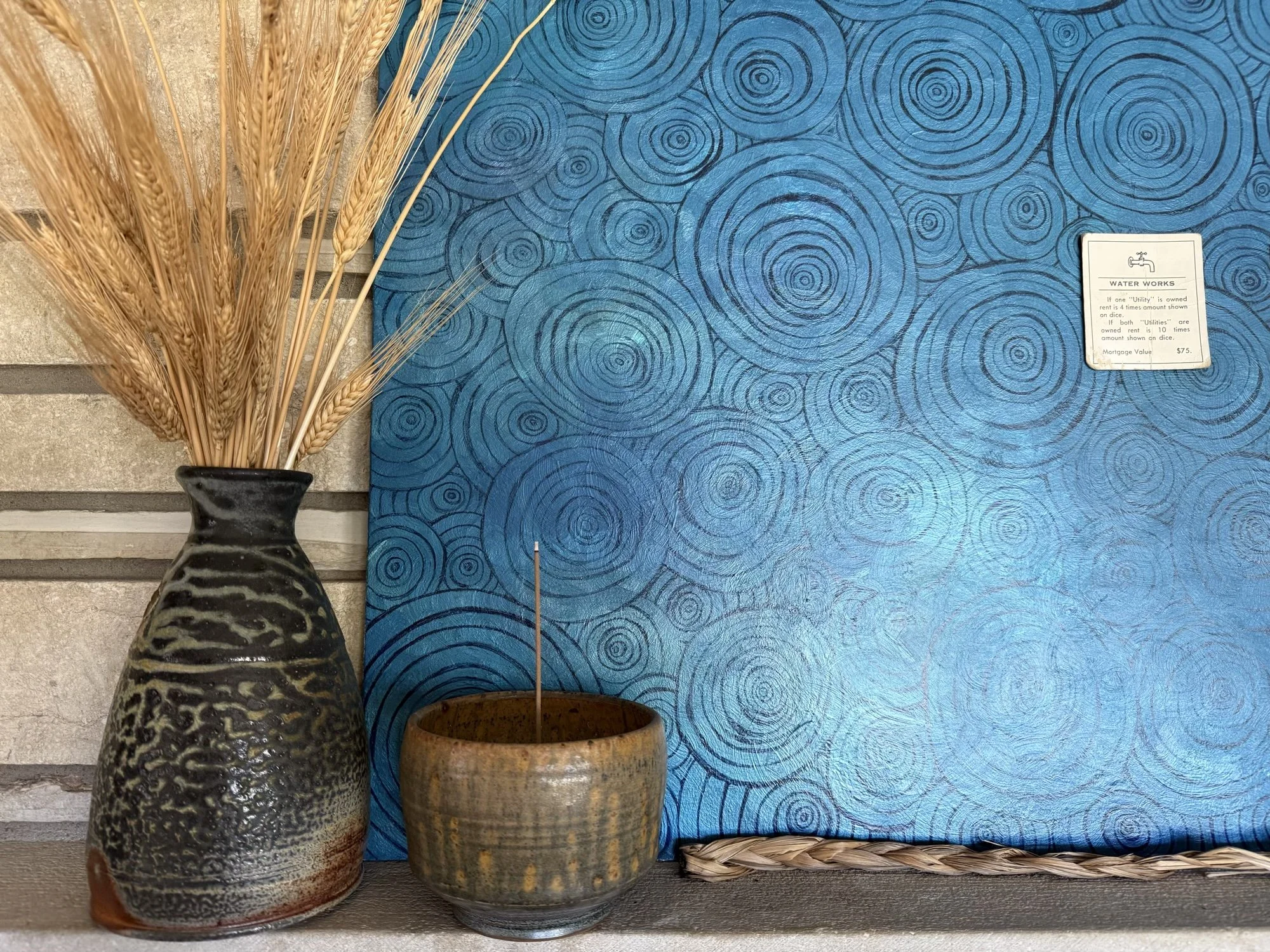
When people walk through the doors of the TankHouse, many notice an immediate shift—the pace changes. The atmosphere feels different. Something softens.
Recently, we asked TankHouse co-founder and artistic curator Denise Renee what she feels creates that experience.
“The first thing I think of is the environment itself,” she said. “Everything that went into creating the space was chosen to support stillness and self-awareness.”
That focus came from a conversation Denise had with TankHouse founder and MyoFascial Release (MFR) practitioner Alan Goltl early in the creation of the space.
“When I asked Alan what was most important to him about the TankHouse, his answer was simple: stillness and self-awareness,” she said. “From that point on, every decision became an expression of those two qualities.”
According to Denise, that intention guided every aspect of the renovation process.
“The colors, the plants, the artwork, the textures, the tile—every element was selected with the same question in mind: does this support someone coming back to themselves?”
One example can be found in the color palette used throughout the space.
“There are fourteen different shades of blue,” Denise explained. “Blue is calming. It’s the color of water. It creates that feeling of being held, almost like being beneath the surface of the ocean.”
Beyond what we see, she believes scent also plays an important role.
“It’s deeper than just fragrance,” she said. “The materials themselves carry a quality. Frankincense, sandalwood, palo santo, myrrh, amber—each one creates a different feeling in a room.”
Different areas of the building are paired with different aromatic materials.
“We use palo santo in the main gathering spaces because it feels clearing and renewing. Myrrh is used in the sound spaces because it has a certain depth to it. Frankincense feels purifying, and amber brings a gentle warmth.”
Sound is another layer woven throughout the environment.
“When people first arrive, they hear the water feature,” Denise said. “There’s something naturally settling about moving water.”
She also points to the presence of nature sounds throughout the building.
“Whales, water, nature sounds—these aren’t structured or metered. They invite the nervous system into a different rhythm.”
Even silence itself becomes part of the experience.
“The float rooms, the sound spaces, the moments between sounds—those are all part of it,” she said. “They create opportunities for surrender and listening.”
When asked what makes the atmosphere of TankHouse Community feel distinct, Denise returned to a simple observation.
“I think what makes the space special is that every sensory input has been chosen with intention,” she said. “What you see, hear, smell, and feel all point toward the same thing: stillness and self-awareness.”
This conversation points to something simple but often overlooked: stillness is both an inner practice and an environmental one.
We are constantly being influenced by what surrounds us—the sounds in a room, the colors on a wall, the scent in the air, the feeling of a space.
By bringing greater intention to these elements, we can create environments that support the qualities we wish to embody—not just at the TankHouse, but wherever we live, work, rest, and gather.